Column · @eveningdesertsafaridubaihub
How to Pick the Right Dune Buggy for Your Dubai Desert Trip
Dubai's desert landscape is a natural playground for off-road adventure, but the vehicle you choose can make or break the experience. A dune buggy that fits your skill level, comfort needs, and safety expectations will give you the freedom to explore rolling sand dunes without worry. The wrong choice, on the other hand, can turn a thrilling day into a rough and tiring ride.
This guide walks you through the key factors to consider when selecting a buggy in Dubai. Whether you are a first-time rider or an experienced driver, these steps will help you match the machine to the terrain and your own confidence behind the wheel.
1. Check the Buggy Type: Touring vs. Performance
Dune buggies in Dubai generally fall into two broad categories. Touring buggies are built for comfort and stability. They usually have wider wheelbases, softer suspension, and seats designed for longer rides. These models are ideal if you plan to spend a couple of hours crossing varied dunes and want to enjoy the scenery without being bounced around.
Performance buggies prioritise speed and agility. They are lighter, have tighter turning circles, and often come with more powerful engines. If you have driven off-road before and want to tackle steeper slopes or carve through soft sand, a performance buggy will give you that responsiveness. The trade-off is a firmer ride and less forgiving handling, especially for a novice.
Think about what you want from the trip. A touring buggy suits families or groups where different skill levels ride together. A performance buggy is better for solo riders or small groups of confident drivers.

2. Assess the Seat and Occupant Configuration
Buggies come in two-seat, four-seat, and sometimes six-seat layouts. A two-seat buggy places the driver and a single passenger side by side or in a tandem arrangement. This setup keeps the vehicle nimble and is easy to control on narrow trails. For a couple or a solo driver who wants a passenger, a two-seat buggy is often the most practical choice.
Four-seat buggies provide extra space for a small family or a group of friends. They are heavier and may feel less responsive on steep dunes, but they offer more stability at moderate speeds. If you are travelling with children or want to share the driving with another person, a four-seat model lets everyone take a turn behind the wheel without swapping vehicles.
3. Evaluate the Safety Features
Safety should influence every decision when picking a dune buggy. Look for a vehicle that has a sturdy roll cage. The roll cage is the metal frame that surrounds the occupants. It protects you if the buggy tips over, which can happen when a dune collapses under the wheels or when you take a corner too fast on loose sand.
Seat belts are essential. A proper lap-and-shoulder belt keeps you secured during sharp turns and sudden stops. Some buggies also come with a safety harness that has a quick-release mechanism. Check that the belts are in good condition with no fraying or stiffness.
Another feature to consider is the steering wheel. Many desert buggies use a steering wheel rather than handlebars, which gives you more leverage when correcting a slide. Ensure the wheel is within comfortable reach and that the pedals are clearly marked for accelerator and brake. If you are renting, ask the operator to show you how the controls work before you set off.
4. Understand the Terrain and Dune Conditions
Dubai's desert is not a uniform sandbox. Some areas have tall, steep dunes that require a buggy with good climbing power. Other zones feature flat sabkha plains mixed with soft sand patches. A buggy with a high torque engine and a low centre of gravity will handle the big dunes more effectively. For flatter terrain, a standard touring buggy with moderate horsepower is adequate.
Wind and recent weather also change the sand's consistency. Loose, dry sand demands a buggy with wide tyres that float on top rather than dig in. If the sand is damp or compacted, narrower tyres may give better grip. When you book a trip through the Safari Desert Dubai official site, the operator usually matches the buggy type to the specific route conditions, so you do not have to guess.
5. Consider the Duration of the Ride
Short rides of thirty to forty-five minutes are very different from half-day excursions. A short ride lets you push the buggy harder because fatigue and heat are not major factors. For a longer trip, comfort becomes important. Check that the seat has adequate padding, that the suspension absorbs the bumps, and that the buggy has a canopy or shade to protect you from the sun.
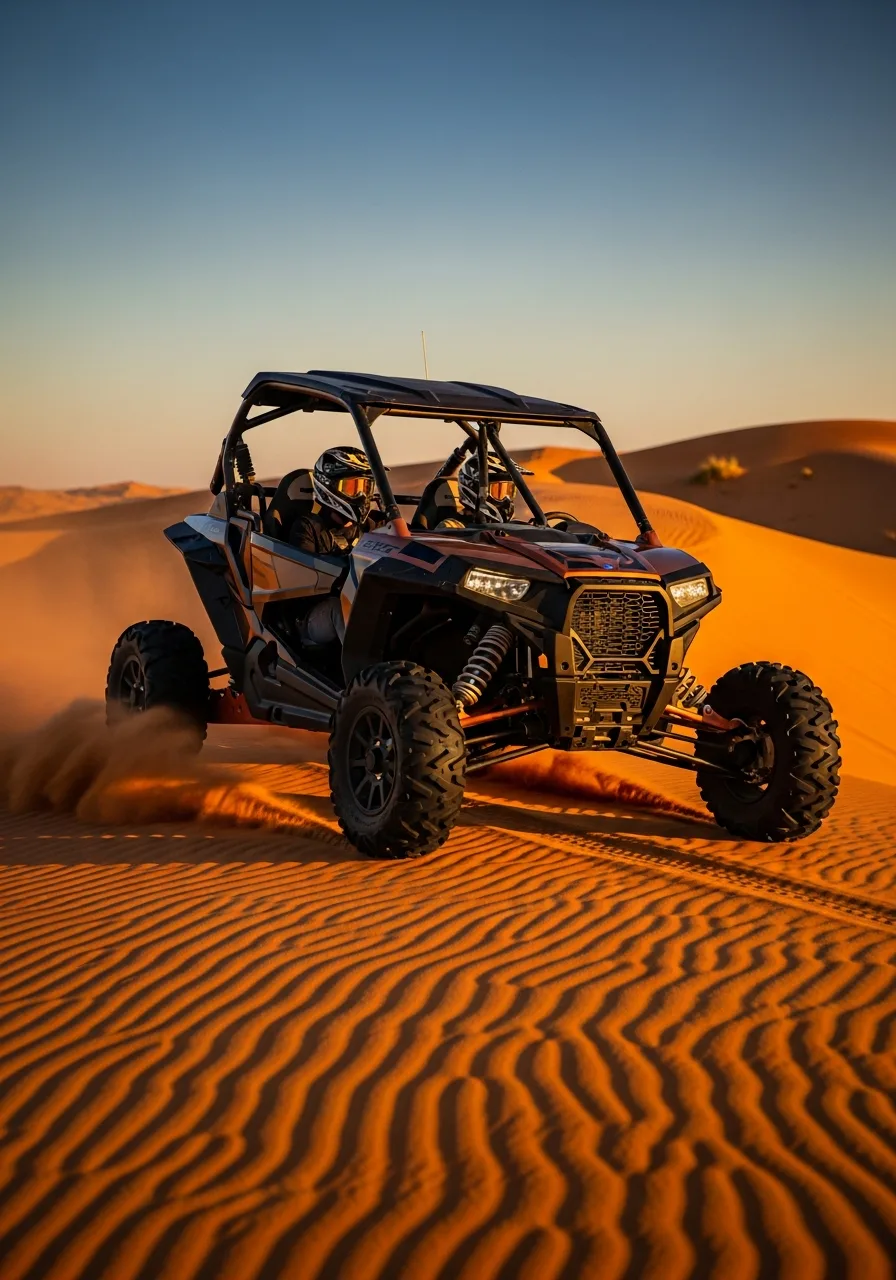
If you are prone to motion sickness, a buggy with a smoother suspension and a slower top speed will reduce the queasiness that comes from bouncing over dunes. Asking the provider about the typical pace and the type of dunes you will cover helps you decide.
6. Inspect the Buggy's Condition Before You Ride
A quick visual check can reveal a lot about a buggy's maintenance. Look at the tyres. They should have visible tread and be inflated evenly. A tyre that looks flat on one side or has cuts in the rubber is a sign of poor upkeep. Check the engine area for oil leaks or loose wires. The buggy should start easily and idle smoothly without sputtering.
Listen for strange noises when the engine runs. A rattling chain or a whining belt indicates a problem that could leave you stranded mid-desert. Also, test the brakes before you move. They should grab firmly without squealing. If anything feels off, ask for a different buggy. A reputable operator will have a fleet of well-maintained vehicles and will not pressure you to take one that seems unreliable.
7. Read the Fine Print on Insurance and Liability
Even with a well-maintained buggy, accidents can happen. Sand dunes shift, wildlife crosses the path, and a momentary loss of concentration can lead to a rollover. Before you drive, understand what the rental agreement says about damage. Some operators offer full coverage that waives your liability for minor damage. Others expect you to pay for repairs if you roll the buggy or break a component.
Ask specifically about sand ingestion. If a buggy's air filter is not sealed properly, fine sand can enter the engine and cause expensive damage. A clear policy on who pays for that kind of repair will save you a nasty surprise later. The Safari Desert Dubai official site provides transparent terms on its booking page, which helps you compare options without confusion.
8. Match the Buggy to Your Driving Experience
Driving on sand is different from driving on tarmac. The surface shifts under the wheels, and steering requires anticipation rather than reaction. If you have never driven off-road, choose a buggy with automatic transmission and power steering. These features reduce the learning curve and let you focus on reading the dunes.
Experienced drivers might prefer a manual transmission buggy that gives more control over gear changes. Some high-performance buggies also have paddle tyres that are designed specifically for deep sand. Those tyres provide extra traction but can feel skittish on hard-packed sections. Be honest with yourself about your skill level. Overestimating your ability is one of the most common reasons for accidents in the desert.
Final Practical Tips
Wear comfortable clothing that covers your arms and legs. The sun is intense, and the sand can be hot enough to burn exposed skin. Closed-toe shoes with a good grip are a must. Sunglasses and a scarf or bandana help protect your eyes and mouth from flying sand.
Keep your phone and valuables in a sealed bag. Sand finds its way into everything, and a gritty phone screen is hard to use. Hydrate well before and during the trip. The desert air is dry, and you lose moisture faster than you realise.
Choosing the right buggy in Dubai comes down to matching the machine to the terrain, your group size, and your comfort with risk. Take your time to inspect the vehicle, ask questions about the route, and pick a buggy that lets you enjoy the desert rather than fight it. A thoughtful choice turns a day in the dunes into a memorable adventure.
 Facebook
 Instagram